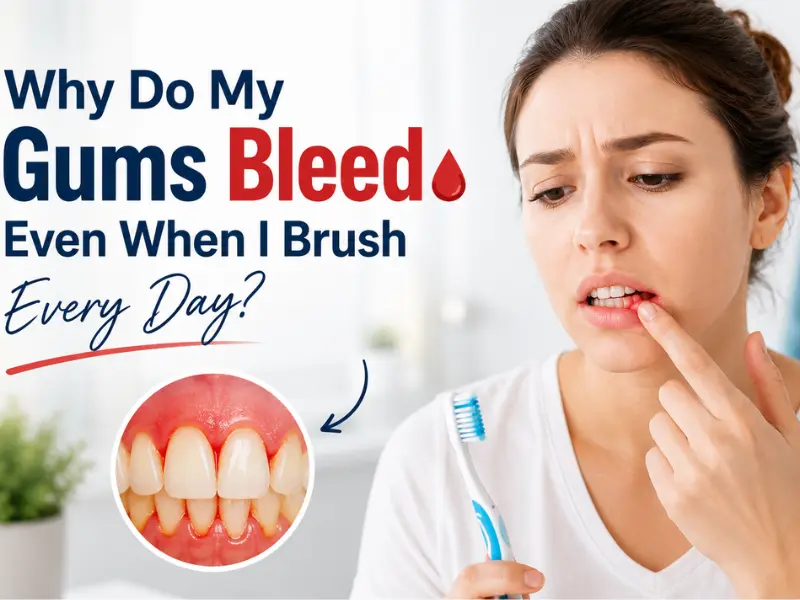


You spit and there is pink in the sink. Again. You brush morning and night, you are not lazy about it, so why does this keep happening?
It is a question we hear constantly and honestly, it makes sense that it is confusing. Most of us grew up thinking bleeding gums meant you weren’t brushing enough. So when it happens to someone who is actually pretty diligent about their routine, it feels like a contradiction. It isn’t one. Bleeding gums almost never come down to effort. They come down to what is happening beneath the surface of the gum tissue itself and that is worth understanding rather than just rinsing away and ignoring.
Below, we will get into the real bleeding gums causes, why gum bleeding tends to show up specifically when you brush and what actually helps versus what just masks the problem.
What’s Actually Behind Bleeding Gums
At the root of almost every case is inflammation. Gum tissue that is inflamed becomes soft and its blood vessels sit closer to the surface, which means they rupture at the slightest touch, even from a toothbrush bristle that wouldn’t bother healthy tissue at all. So the bleeding itself isn’t the problem. It is a symptom pointing at something else going on underneath.
It typically begins in the plaque. The bacteria that form the layer of goo on your teeth at the end of the day make up that sticky coating and if they’re not properly removed with good brushing and flossing, they will harden and form tartar right next to your gums. Tartar is coarse and abrasive to the tissue adjacent to it, and the tissue reacts like any other irritated tissue: it becomes red, swollen and tender. Bleeding during brushing and flossing is usually the first indication of gingivitis, which is the earliest stage. Gingivitis can often improve significantly with better oral hygiene and professional dental cleaning.
When left untreated for long, gingivitis may progress to periodontitis, a completely different story. This is a more severe infection involving the underlying bone and ligament which secure the teeth, not only the tissue on the surface. At this point, you may have other symptoms in addition to bleeding: Gums that appear to be receding away from the teeth, breath that cannot be cleared by brushing, or a slight looseness in the teeth. Periodontitis doesn’t heal on its own and usually requires more than a regular cleaning to control it. If this is you, it’s a good idea to visit a periodontic office to get it checked out before it gets worse.
Brushing technique plays a role too, just not the one people usually assume. A lot of patients think harder brushing means cleaner teeth, but scrubbing aggressively, or using a stiff-bristled brush, actually wears down and injures the gum tissue over time. That damage makes gums more likely to bleed, not less. A soft-bristled brush and gentle, circular strokes clean just as effectively without doing that damage.
And then there’s flossing, which trips people up in a different way. If you’ve fallen out of the habit and you’re just starting again, don’t be alarmed if your gums bleed for the first several days. Tissue that isn’t used to the friction of floss is more delicate at first and that usually calms down within a week or two once it toughens up. But if it’s still bleeding well past that point, that’s not “getting used to it” anymore. That’s inflammation that floss alone isn’t clearing.
There are a handful of other things that can tip the scales too. Hormonal shifts, like during pregnancy, increase blood flow to the gums and make them more reactive. Certain medications, blood thinners especially, reduce clotting and make even minor irritation bleed more visibly. Low vitamin C or vitamin K can weaken gum tissue. Smoking and vaping are sneaky because they actually mask inflammation while still damaging the gums underneath. A poorly fitted crown or denture can rub against the gum and cause localized bleeding in just that one spot. And conditions like diabetes affect how well your body fights off the bacteria causing the irritation in the first place.
So Why Does It Happen Specifically When You Brush?
Because brushing is the moment the inflammation gets tested. Healthy gum tissue is firm enough to handle daily brushing without any issue at all, so if yours is bleeding, brushing isn’t creating a new problem; it is just revealing one that is already there. The exception is if you are using too much pressure or a harsh brush, in which case the brushing really is contributing to the damage. Otherwise, think of it less as cause and more as the moment you happen to notice.
When Is It Something to Actually Worry About?
Bleeding once in a while, after a rougher brushing session or a first flossing attempt in months, usually is not a big deal. What is worth paying attention to is bleeding that shows up most days, lasts more than a week or two, or comes paired with swelling, tenderness, or gums that seem to be receding. Gum disease left untreated is one of the leading causes of tooth loss in adults and there’s a growing body of research connecting it to things like heart disease and complications with diabetes. Your gums tend to show signs of trouble early, often before anything else does, so it’s not something to wave off indefinitely.
If you are noticing any of the following, it is a good time to get checked:
- Bleeding most days, not just occasionally
- Gums that stay swollen, red, or sore
- Gums that look like they’re pulling away from your teeth
- Breath or taste that doesn’t clear up
- Teeth that feel loose or shifted
A dental exam can sort out whether you’re looking at early gingivitis, something more advanced, or a completely different cause. Our team handles this kind of evaluation regularly as part of general dentistry visits and it’s usually a quick, straightforward appointment.
What Actually Helps
There’s no single fix, but a few changes tend to make a real difference for most people. Start with the toothbrush itself: soft bristles, gentle circular motion, no scrubbing. Keep flossing daily even through the initial adjustment period, since skipping it again just resets the clock. An antimicrobial or fluoride rinse can help keep bacteria down between cleanings. And don’t stretch out the time between dental visits. Twice a year is the standard for a reason: it keeps plaque and tartar from building up to the point where they start causing problems.
If bleeding has been going on for a while despite doing all of this, it is probably time for something more targeted than home care. Deep cleanings, scaling and root planing, or in more advanced cases, gum surgery, can address inflammation that’s already progressed past what brushing and flossing alone can fix.
The Bottom Line
Bleeding gums, even for someone who brushes every day without fail, usually trace back to inflammation, whether that’s from plaque buildup, gum disease, brushing habits, or something else going on in the body. A little bleeding here and there might just need gentler brushing and more consistent flossing to settle down. But bleeding that keeps coming back or seems to be getting worse deserves an actual look, not just a mental note to deal with later. Catching it early is almost always easier and less involved than waiting until it’s advanced. If your gums have been bleeding more than they should, reach out to Montclair Dental Spa and let’s figure out what’s going on.
FAQs
Why do my gums bleed when I brush?
Most of the time it is because the gum tissue is already inflamed, usually from plaque and bacteria sitting along the gumline. Brushing does not cause this on its own, it just puts pressure on tissue that is already irritated, which is why the bleeding tends to show up in that moment.
Is bleeding gums a sign of gum disease?
It can be and it is actually one of the earliest signs of gingivitis. That does not mean every instance of bleeding means you have gum disease, but if it is happening regularly or sticking around for more than a week, it is worth having a dentist take a look rather than assuming it will pass.
Can brushing too hard cause bleeding gums?
Yes, this trips a lot of people up. Pressing hard or using a stiff-bristled brush can actually injure the gum tissue over time, which leads to more bleeding, not less, along with gum recession down the line. A softer brush and lighter touch usually cleans just as well without the damage.
Can flossing cause your gums to bleed?
It can, especially if you’re getting back into the habit after a break. That kind of bleeding is usually temporary and should ease up within a week or two as your gums adjust. If it’s still happening after that, it’s more likely a sign of inflammation than a flossing problem.
How long does it take for bleeding gums to heal?
For mild inflammation, tightening up your brushing and flossing habits along with a professional cleaning often shows improvement within a couple of weeks. More advanced gum disease takes longer and may need ongoing periodontal treatment before it fully resolves.
Can diet affect bleeding gums?
It can. Not getting enough vitamin C or vitamin K can leave gum tissue weaker and more prone to bleeding. Eating a diet with plenty of fruits and vegetables supports healthier gums alongside your regular brushing and flossing routine, though it’s not a substitute for either.